
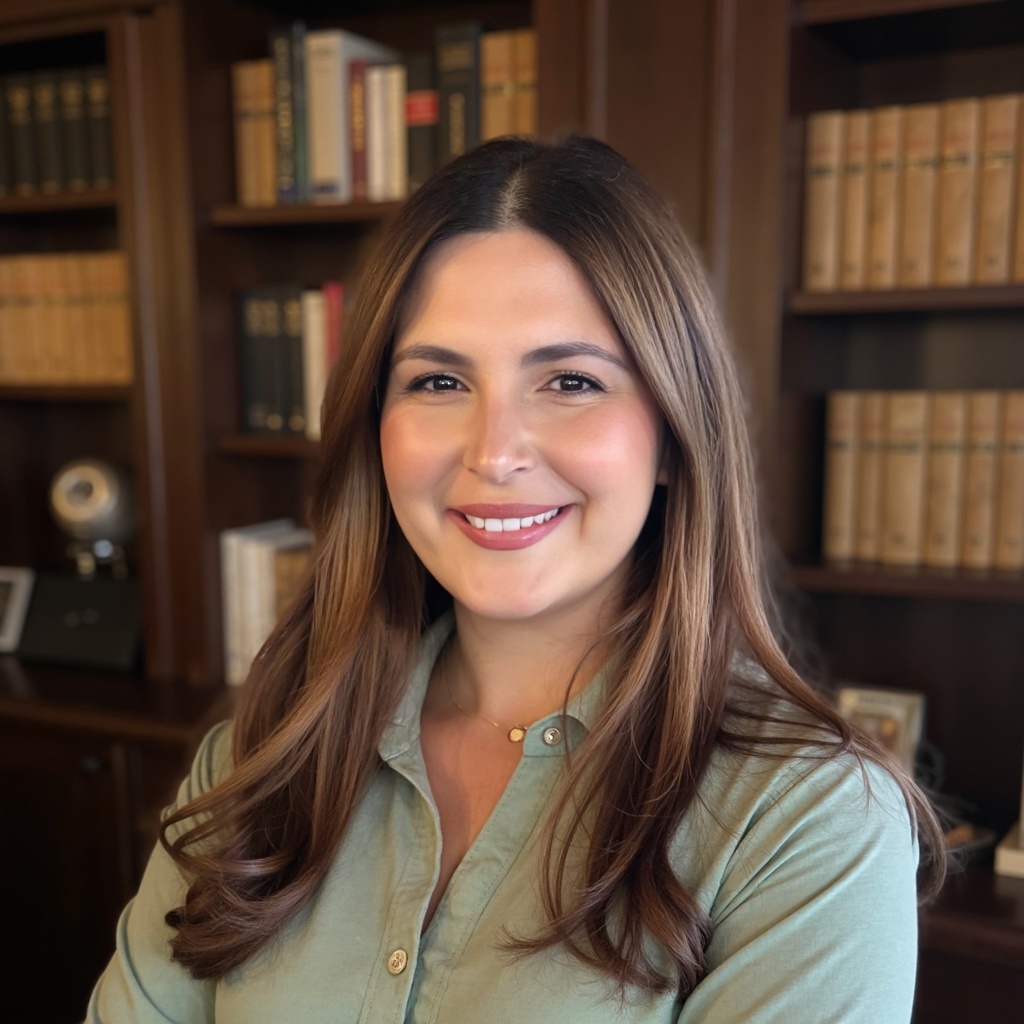
Cassidy Azzow, PsyD, MAAT, DLLP
Dr. Cassidy Azzow completed her doctoral training in clinical psychology in 2025. She has nearly nine years of clinical experience working with children, adolescents, and adults across a variety of settings, including neuropsychological rehabilitation facilities, outpatient clinics, and inpatient units.
Dr. Azzow completed her Psychology Residency at the John D. Dingell VA Medical Center, where she treated a wide range of mental health concerns, including anxiety, depression, grief, chronic pain, PTSD, personality and relationship difficulties, and severe and persistent mental illness.
In her outpatient practice, Dr. Azzow treats a variety of mental health concerns using Acceptance and Commitment Therapy (ACT), Internal Family Systems (IFS), and other evidence-based approaches to best meet each client’s needs. She earned a Master’s degree in Art Therapy from the School of the Art Institute of Chicago in 2017 and is able to effectively integrate art-based interventions for clients who enjoy expressive modalities in therapy.
Additional therapeutic approaches Dr. Azzow is trained in include Cognitive Processing Therapy for PTSD, Emotional Awareness and Expression Therapy for chronic pain, Attachment-Focused Therapy, ACT for the management of severe mental illnesses and Cognitive Behavioral Therapy.
A message from Dr. Azzow:
“The reason I have chosen to focus on ACT and IFS is because I have seen them change people’s lives. Clients have shared that therapy can sometimes feel tough or even stigmatizing when it seems like they are only talking about their problems. While ACT and IFS certainly address challenges, they also emphasize moving toward more of what makes you you and integrating all of your experiences.”
Acceptance and Commitment Therapy (ACT)
At the heart of ACT is the idea that the more psychologically flexible a person is, the greater sense of wellbeing and confidence they experience. Psychologically flexible people are able to adapt effectively to different situations and seasons of life while staying connected to their deeply held values.
Stress, depression, and anxiety often stem from not living the life you want, fighting things that are outside your control, or not being fully engaged with the present moment. When you aren’t in contact with the present moment, you are usually in one of three places: the past, the future, or an imagined version of the present. Dr. Azzow utilizes Acceptance and Commitment Therapy (ACT) and psychodynamic interventions to help you create a life that is meaningful and rooted in your values.
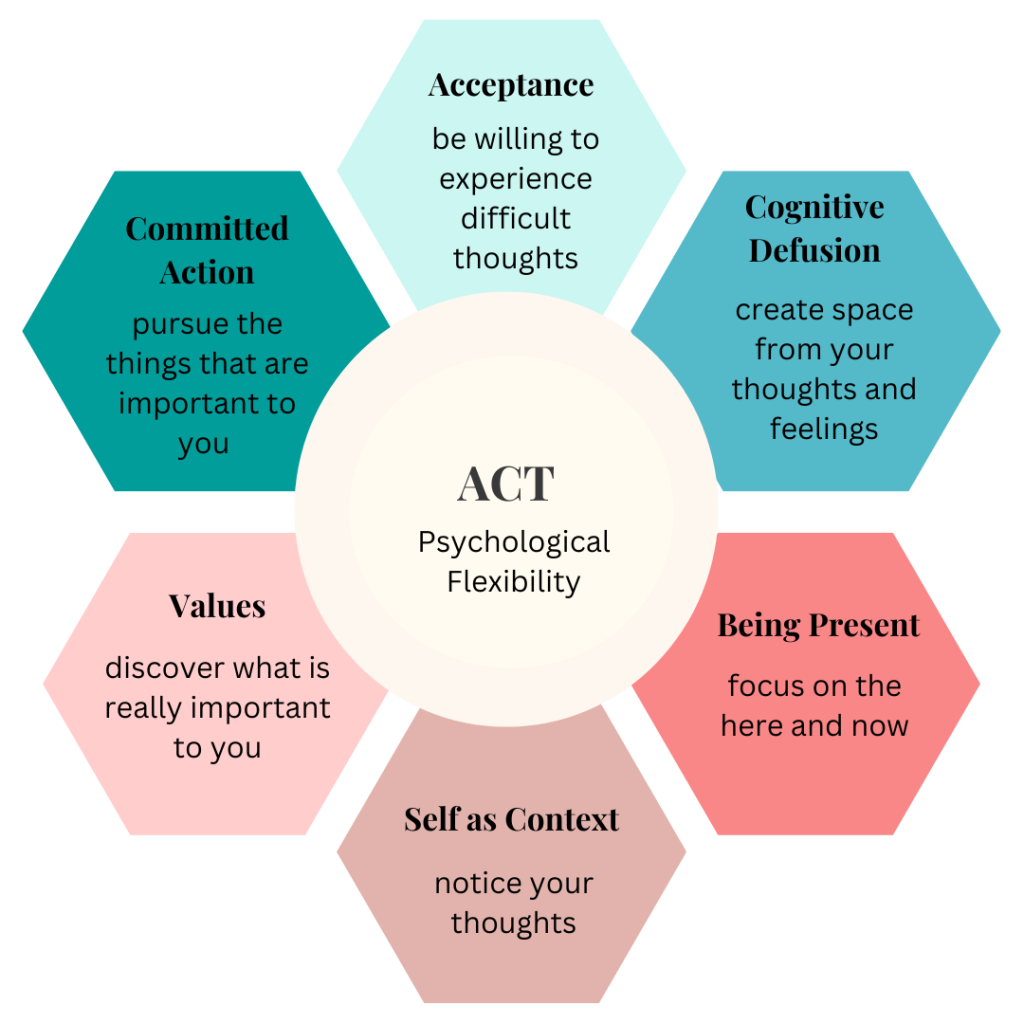
Acceptance and Commitment Therapy (ACT) helps individuals relate more effectively to their thoughts and feelings rather than struggle against them, promoting greater psychological flexibility.
ACT focuses on core processes such as acceptance, cognitive defusion (creating more space from your thoughts), present-moment awareness, self-as-context, values, and committed action.
Applying ACT strategies can lead to greater resilience and a more values-driven life, enhancing overall wellbeing and personal fulfillment.
Dr. Azzow is also highly skilled in psychodynamic approaches, which help uncover the underlying issues that keep people feeling “stuck.” She additionally uses the Internal Family Systems (IFS) model to address deeper concerns you may be experiencing.

Internal Family Systems (IFS)
OVERALL GOALS OF INTERNAL FAMILY SYSTEMS
• To achieve internal balance and harmony.
• To become more in touch with your “core” Self so you can feel more in control and regulated. We know we are connected to our core Self when we experience the “8 C’s”: Calm, Curious, Compassionate, Confident, Clear, Courageous, Creative, and Connected, as well as the “5 P’s”: Playfulness, Perspective, Patience, Persistence, and Presence.
• To develop more compassion and collaboration with other parts of your personality that may feel unbalanced or out of control. For example, losing your temper and hurting relationships even when you don’t want to.
Throughout our life experiences, we develop different responses and interpretations of our environment and relationships. These tendencies are designed to help us navigate the world as safely as possible. While safety-seeking is a primary goal for both children and adults, what feels safe can sometimes become ineffective or dysfunctional in our current stage of life. In other words, what worked at one point may no longer be working now.
Internal Family Systems helps us better understand ourselves and the reasons behind our behaviors and relationship patterns, allowing us to work toward meaningful change.
 Via Virtus Psych